A bicycle tourer on a sealed Australian road is a vehicle with almost no metal around the body. Cars, caravans, farm utes, road trains and motorcycles share that seal. The useful skill is not speed. It is being predictable enough that a driver can give you the space the law already wrote down.
This URL is a leftover from the old motorcycle-tour site that used a “Thailand motorcycles / superbikes” path. Those products are gone. The path now talks about sharing sealed Australian roads, because that is the everyday hazard when a rail trail ends at a highway crossing or a touring day is a quiet farm road.
1 m / 1.5 m
NSW passing
Transport for NSW; confirm other states
Helmet
Required
Every state; limited NT adult exception on some paths
Left
Ride
Hold a line so a pass is possible
When a tour leaves the formation
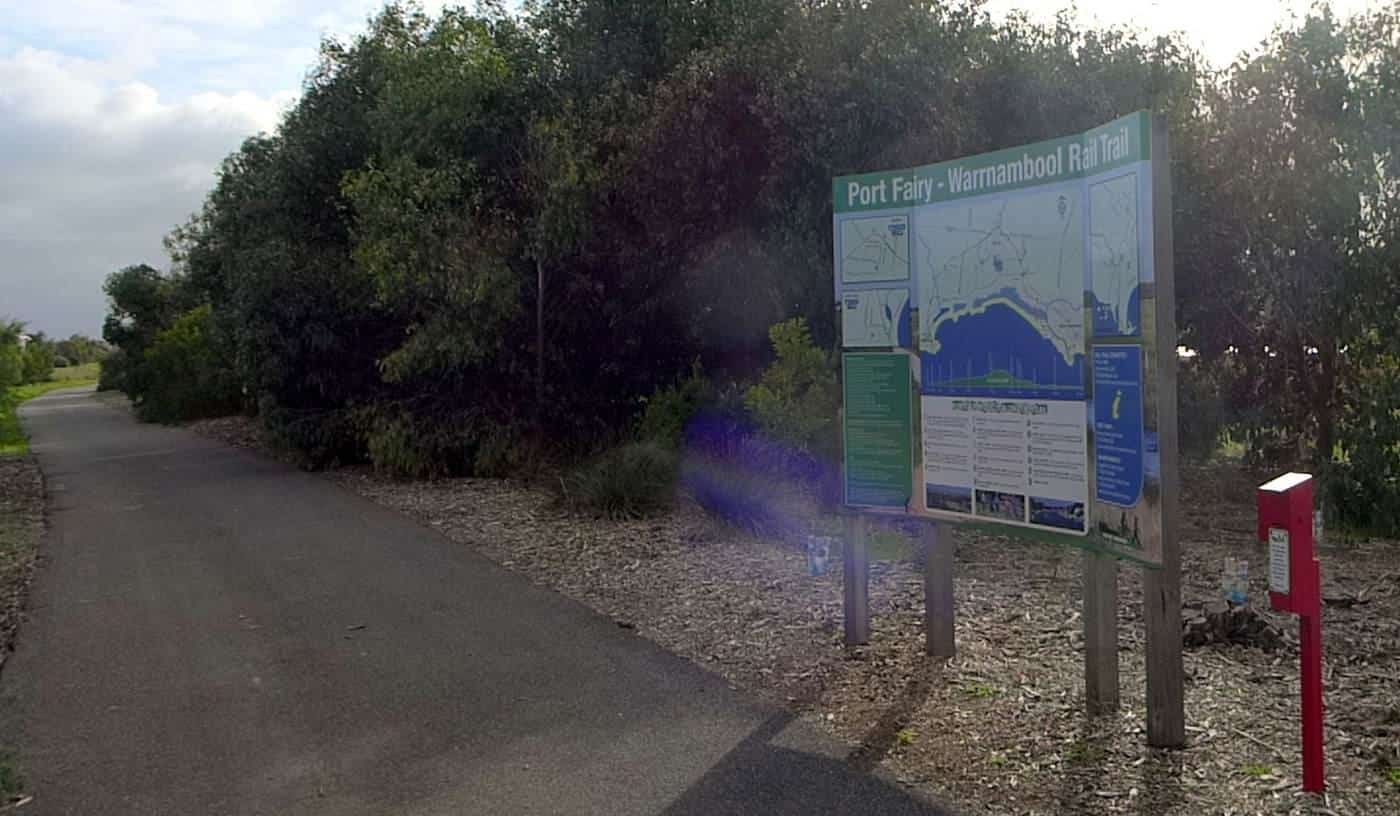
Rail trails exist so that you can avoid traffic. They do not eliminate it. Rail Trails Australia’s Murray to Mountains listing includes an on-road connection toward Rutherglen on 100 km/h roads with no shoulders. The Brisbane Valley crosses the Brisbane Valley Highway in Esk. The Riesling Trail crosses Horrocks Highway. The Munda Biddi, DBCA says, uses some public roads. Tasmania’s touring product on this site is almost entirely public road.
So the sealed-road chapter is not optional colour. It is the bit between the photograph and the pie.
Read the longer national page at road rules and safety. This heritage URL is the short, traffic-focused version.
Helmets, lights and a bike that can stop
Austroads summarises that bicycle helmets are compulsory, with limited exceptions that differ by state — the Northern Territory treats adults on some paths differently; South Australia records a Sikh-religion exemption; Western Australia describes medical or religious exemptions granted in writing. Unless you hold a written exemption that applies where you are, wear an approved helmet, fitted and fastened.
Lights are not only a night-club rule. Tasmanian and other state pages require a white front light and a red rear light in darkness or low visibility, plus reflectors. Tunnels, storm-dark afternoons and a late arrival into Mansfield all count. A bell or other warning device is required in several states and is courtesy on a shared path in all of them. Brakes must work. That sentence should not need a citation, and the official pages still write it down.
Passing distances, and the rider’s half of the bargain
Transport for NSW tells drivers to leave at least 1 metre when passing a cyclist where the limit is 60 km/h or less, and 1.5 metres where it is higher. South Australia publishes the same pair of numbers. Other states have moved in the same direction; the live state page wins if they differ.
Those laws only work if you are somewhere a driver can measure. Ride a predictable line, close enough to the left that a pass is possible, not so far left that you disappear into gravel and then swerve. On a multi-lane road, state rules about lane use vary; do not take a memory of one state into another.
Two abreast is legal in many jurisdictions and becomes rude or unsafe on a narrow crest. Single file when traffic approaches is courtesy that also keeps you alive. A group that occupies the entire lane on a 100 km/h tourist road is not making a point. It is making a problem.
Intersections, doors and the town problem
Tasmania’s Road Safety Advisory Council notes that cyclist crashes cluster at intersections, when leaving a path or driveway, and when a car door opens into a rider. That pattern is not unique to Hobart. Wangaratta, Clare, Ipswich and Murwillumbah all have parked cars and side streets.
When a rail trail dumps you onto a highway, stop. The formation’s gentle grade does not grant you priority over a truck. When you leave a bakery, look for doors. When you turn right, signal in the states that require it — Victoria, Queensland, New South Wales and the Northern Territory have long required a right-turn signal; Western Australia and Tasmania have required both signals. Confirm the current wording. A vague wave is not a rule.
Footpath riding is a state lottery. South Australia and the Northern Territory have long allowed all ages unless signed otherwise. Other states restrict it. A touring bike with panniers on a busy footpath is often the wrong tool even when it is legal. Give way to pedestrians whenever you share a path.
Choosing a sealed touring road
Road touring is the type guide. The short version: a quiet farm road with a low limit and a usable shoulder can be a gift. A national highway with freight, caravans and no shoulder is a transfer at best. The Pacific Highway is not an itinerary on this site. The Great Alpine Road in peak tourist season is a judgement call you make with lights on and a willingness to pull over.
The Murray to Mountains sealed formation is the other kind of seal: a path built for bikes, still shared with walkers and e-bikes, still crossed by roads. Speed that feels safe on empty asphalt is not safe through Bright’s trailhead. Shared-path manners apply.
Wildlife and weather on the seal
Kangaroos at dawn and dusk are an Australian road fact. A bicycle loses that argument. Finish the day’s kilometres before last light in the bush. Cattle grids on rural seals will throw a narrow tyre. Frost on a High Country morning will do the same. Black ice on a Tasmanian highland road is Discover Tasmania’s warning to motorists; it applies harder to you.
Heat on bitumen is a radiant extra on top of air temperature. The Queensland warm-climate page at /motorcycle-tours-thailand/ is the BOM companion. Wind on an open sealed road is why a 40 km day can be a 60 km effort. None of that is a reason to take a highway “to get it over with.”
What we will not do on this URL
We will not review superbikes. We will not write a Thailand motorcycle circuit. We will not invent a live traffic count or a “safest highway in Australia” list. We will not tell you that high-visibility gear makes you exempt from a bad pass.
We will tell you to cite Transport for NSW, South Australia’s cycling-laws page, Western Australia’s Road Safety Commission, Tasmania’s Road Safety Advisory Council, and Austroads for the helmet summary. Then we will tell you to ride as if the next driver has not read any of them.
How this page connects
The full rules essay is road rules and safety. The type essay is road touring. The sealed first destination is Victoria. If you came from a motorcycle bookmark, the about page explains the domain history in one place.
This path once sold superbikes. It now says: hold a line, wear the helmet, light the bike, and treat every highway crossing as the moment the rail trail stopped protecting you.
Frequently asked questions
Is this still a Thailand superbike page?
No. The URL is a leftover from the previous motorcycle-tour operator. The copy now covers how bicycle tourers share sealed Australian roads with motor traffic, using official road-rule sources. We do not sell motorcycles.
What passing space should Australian drivers give cyclists?
In New South Wales, Transport for NSW requires at least 1 metre where the limit is 60 km/h or less, and 1.5 metres above that. South Australia publishes the same distances. Confirm the current wording for every state you ride.
Sources and further reading
Facts on this page were checked against these primary and official sources. Conditions change — confirm before you travel or buy.
- Sharing the road — Transport for NSW
- Cycling laws — Government of South Australia
- Bicycle riders — Government of Western Australia
- Cyclists — Road Safety Advisory Council (Tasmania)
- Bicycle helmet exemptions — Austroads
- Murray to Mountains Rail Trail — Rail Trails Australia