Pack the bike for the official surface, the water for the longest gap, and the clothes for a Bureau of Meteorology forecast — then stop adding objects that are really anxiety. A rail-trail weekend with a booked bed is a small bag. A Munda Biddi forest section is a different bag. Copying one list onto the other is how people climb the Blackbutt Range with a tent they will not pitch, or roll toward Blinman with a single bottle because the Clare Valley had pubs.
This page is a field checklist. It is not a catalogue. We will not invent a “best pannier of 2026”, a hire price, or a battery range. Legal equipment comes from state pages. Surfaces come from Rail Trails Australia, the Munda Biddi Trail Foundation and South Australia’s Office for Recreation, Sport and Racing. If a product is optional, we say so.
Start with the tour you are actually doing
Write one sentence before you open a cupboard.
- Sealed path, beds in town: Murray to Mountains asphalt, a Northern Rivers day, a Riesling out-and-back. Credit-card touring. Repair kit, layers, water for the day, lights for the tunnel.
- Unsealed rail trail, beds in town: Brisbane Valley or Great Victorian sections. Wider tyres. More tubes. The same short clothing list. After rain, a jacket you believe.
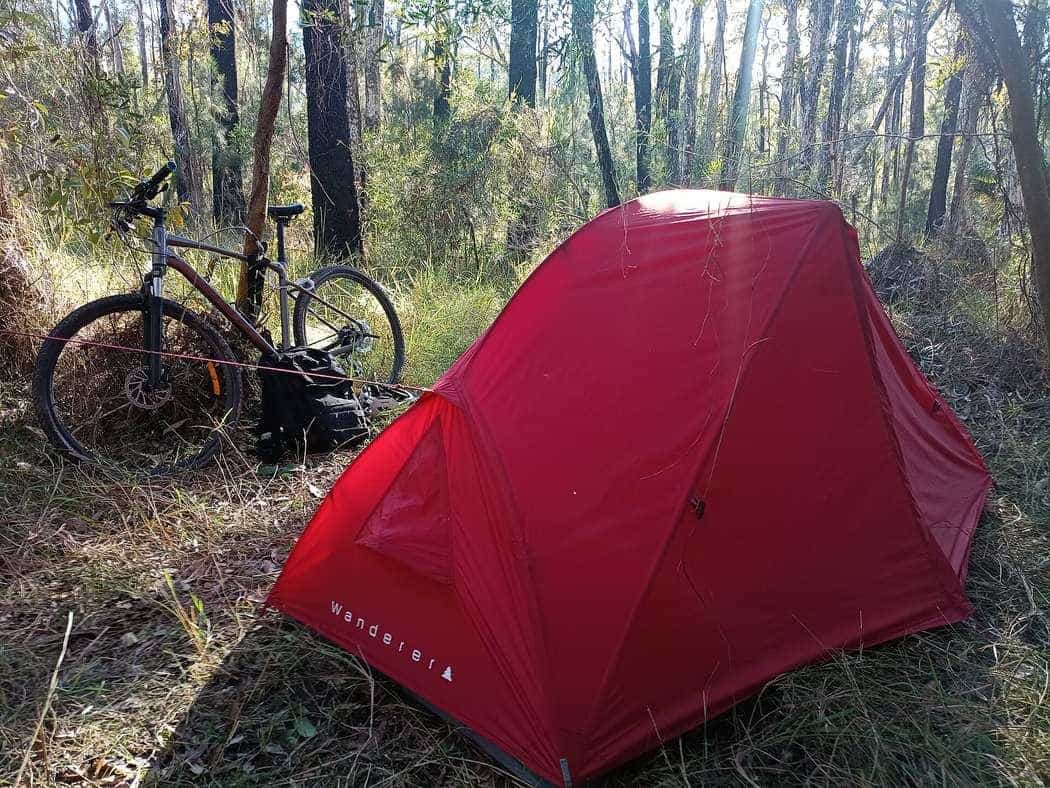
- Remote dirt, shelters or camps: Munda Biddi forest nights, Mawson map sections away from Clare. Water as a project. Food to the next resupply. A messenger that works without mobile coverage. ORSR’s own list is the spine of that bag.
If you cannot name the official length and the longest gap between services, you are not packing yet. You are still on planning.
Helmet
Non-negotiable
Compulsory; limited listed exemptions
Lights
Night and tunnels
NT and WA spell out the kit
Water
For the longest gap
ORSR: country supplies not guaranteed
The bike is the first packed object
Match the bike to a cited surface, not to the bike you wish you were seen on.
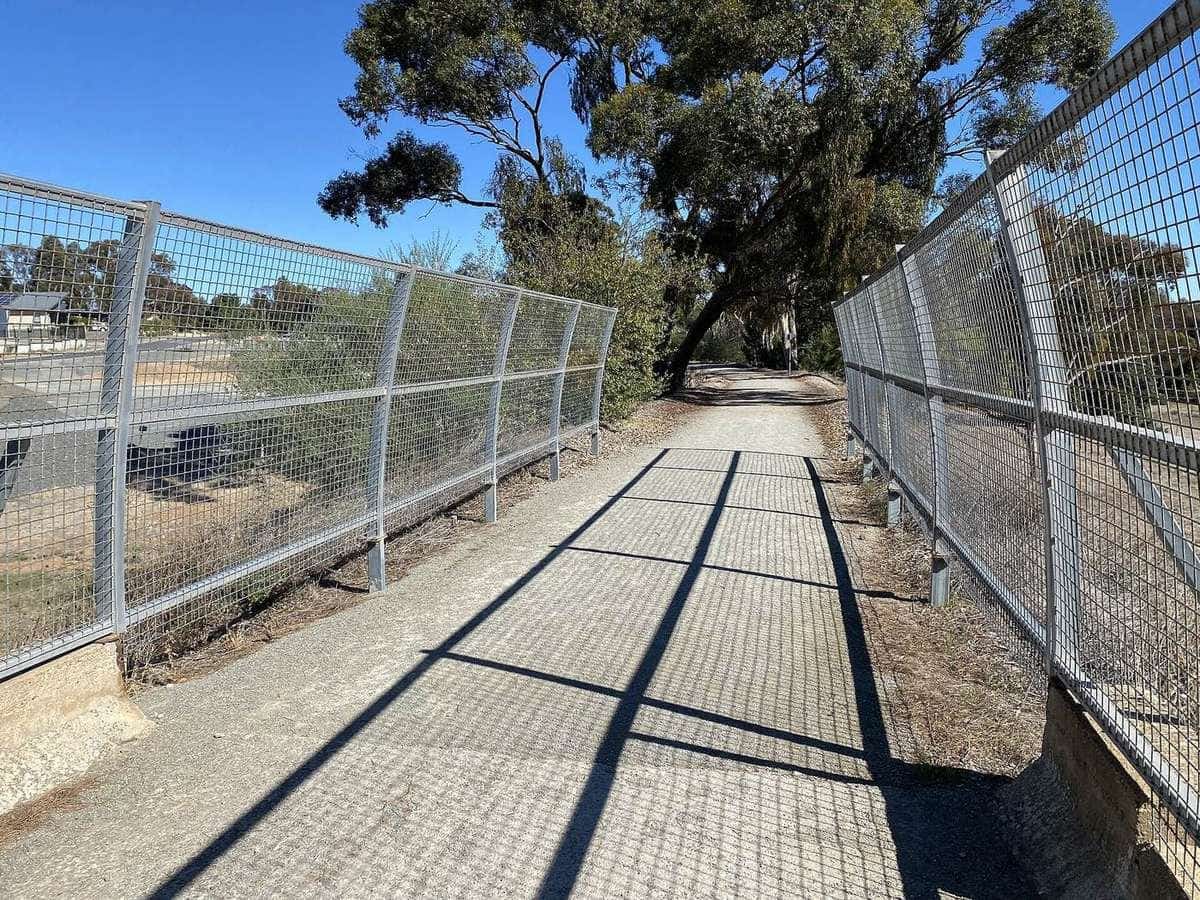
Sealed. Rail Trails Australia lists the Murray to Mountains as asphalt for 137 km. A road, endurance, hybrid or touring bike all make sense. So does a legal e-bike. Narrow tyres are a comfort choice on continuous seal, not a moral victory. Practise with the bags on. A handlebar bag changes steering.
Fine gravel. The Riesling and Rattler listing is fine gravel. A hybrid or gravel bike with wider tyres is the usual honest tool. A road bike can be ridden by a stubborn person on a dry day and will be a poor story after rain.
Mixed coarse gravel and earth. Rail Trails Australia’s Brisbane Valley listing is coarse gravel, compacted earth, fine gravel and sealed town pieces, and it says some sections need an off-road bike and competency on unsealed surfaces. That sentence is the packing decision.
Remote dirt. ORSR: you need an off-road bicycle on the Mawson; it is not suitable for road bikes; carry adequate spare tyres and be prepared for rough terrain. The Foundation: mountain-bike or gravel experience is recommended on the Munda Biddi; northern pea gravel, southern loam and fine white sand. Pack the bike you would ride on that sentence, serviced, with the tyres you have already used on dirt.
E-bikes. Only if they meet the state’s power-assisted definition and the manager allows them. The Northern Rivers FAQ allows e-bicycles up to 250 W and bans e-scooters and petrol-powered bicycles. Pack the charger, the cable, and a lock. Measure range at home with the same load. See e-bike touring.
Hire bikes exist in trail towns. We will not quote a rate. Ask about tyre width, recent service, and — if it is an e-bike — battery age and a spare charger. Ride around the block loaded before you accept the keys.
What the law wants on the bike
Pack these because a state page said so, then keep them because a tunnel is dark.
Helmet. Austroads: compulsory for bicyclists in Australia, with a short exemption table (NT adult path exception, SA Sikh exemption, some medical or religious exemptions). Fitted and fastened. Children and trailer passengers included where the state says so — WA is explicit. See road rules.
Brakes, bell, reflectors, lights. The Northern Territory’s minimum list is a clean touring baseline: bell or horn; white front reflector; working brakes; red rear reflector; and at night a white front light and a red rear light. Western Australia adds visibility distances (lights 200 m, rear reflector 50 m in low beam), wheel and pedal reflectors, and a load no wider than 800 mm. Carry lights even if you “never ride at night”. Cheviot Tunnel, the Northern Rivers tunnels, and a late bakery will not care about your intention.
The rest of the vehicle rules. One hand on the bars (NT). No more people than the bike is designed to carry (WA). If you pack a child seat or a trailer, read the age and design conditions on the state page before you pack the child.
We only quote fines when a cited page prints them. WA’s table and the TfNSW passing-distance penalty live on the rules page, not here.
How to carry the bag
Panniers on a rack suit sealed paths and many gravel rail trails. Heavy items low and forward of the rear axle if you can. Keep the width honest — WA’s 800 mm figure is a rare official hint that barn-door bags are not a decoration.
Bikepacking bags (frame, seat, handlebar) suit rough dirt and bikes without racks. They keep mass in the triangle. They hold less shopping. On the Munda Biddi’s brushier pieces they snag less than a wide pannier.
A small handlebar or top-tube bag for the things you touch every twenty minutes: snacks, sunscreen, phone, a layer, the day’s map screenshot.
A backpack is the option to avoid for anything longer than a commute. On a loaded bike it raises the centre of gravity and soaks your back. A small hydration pack can be the exception if you already ride that way and the trail is hot.
Test-pack and ride a loaded hour at home. Rattles, unreachable snacks, and a pedal that hits a bag are cheap problems on a Tuesday.
Repair kit you have already used
Punctures are ordinary on gravel and not rare on seal. Pack a kit you have operated in your driveway, not a gift set.
Minimum that belongs on every tour:
- at least two tubes that fit the tyres you actually have
- levers, patches, and a pump you have inflated a tyre with
- a multi-tool that includes the hex keys on this bike
- a quick link or spare chain pins
- tape and a few zip ties
Add when the official route gets remote or coarse:
- a tubeless plug kit if those are your tyres
- a spare derailleur hanger
- brake pads
- a spoke key and a couple of spokes if you know how to use them
- chain lube in a small bottle
- the spare tyre ORSR’s Mawson advice is pointing at when it says “adequate spare tyres”
We will not sell you a brand. We will say that a kit you cannot use is decoration.
Clothes for a BOM forecast, not for a catalogue
Open the seasons page and the BOM town forecast, then pack layers.
Every season: padded shorts or a liner you have already sat in for four hours; a breathable top with sun sense; a jacket that works in wind and rain; gloves; sunglasses; something dry for the evening if a bag van exists, or a very small dry evening kit if it does not; an approved helmet that is not optional clothing.
Hot humid SEQ and hinterland summers: extra water capacity, electrolytes you will actually drink, sun protection, a way to sit out the middle of the day. Light colours. The NT remote-riding page mentions bright, sun-protective clothing as visibility and climate at once.
Frosty Victorian winters: a real warm layer, full-finger gloves, something for the ears and neck, lights for short days, and the patience not to sprint away on a timber bridge that still has ice.
Shoulder seasons: the jacket stays. Mornings lie.
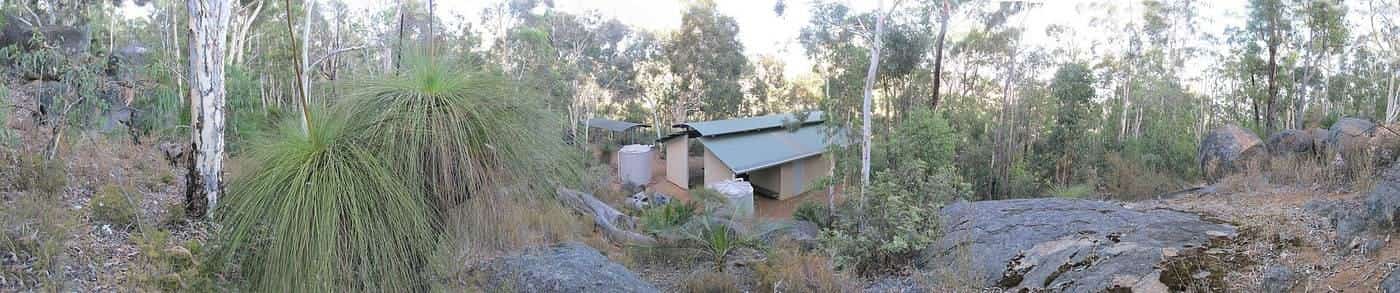
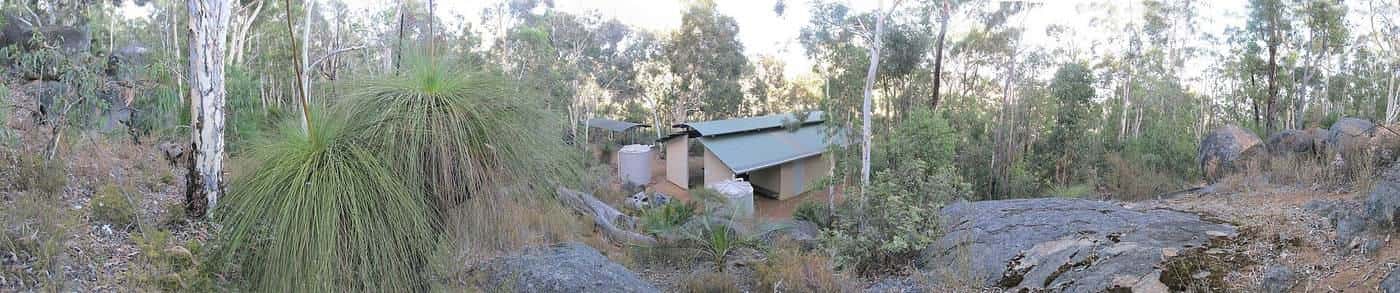
South-west forest and Mawson nights: the Foundation says Munda shelters are fire-pit free and that you need a fuel stove and warm clothing. ORSR’s Flinders nights are still desert-adjacent even when the day was hot. Pack the night, not the postcard.
Wash as you go rather than packing a second wardrobe. Trail towns have sinks. Remote sections have less water to waste on laundry — another reason the bag stays small.
Water and food
Water is the packing item people lie about.
On a rail trail with towns at old station spacing, carry enough to be comfortable if the next tap is broken. Rail Trails Australia describes drinking water in Brisbane Valley towns; that is not a licence to roll out of Fernvale with 400 millilitres. On the Mawson, ORSR says reliable country water cannot be guaranteed, that you should carry enough on the bike plus more in the bags, and that you should never drink from creeks and waterholes. On the Munda Biddi, shelter tanks are a facility, not a laboratory result after a dry month.
Food follows the same honesty. Rail-trail days can be bakeries if the town is actually open — the Northern Rivers FAQ notes that partner businesses have their own hours. Remote days are carried calories plus a margin. ORSR tells you to carry sufficient food. We will not invent a gram-per-hour chart.
Electrolytes belong in heat. A sit-down meal belongs in the day-split, which is planning, not a sandwich brand.
Navigation, power and being findable
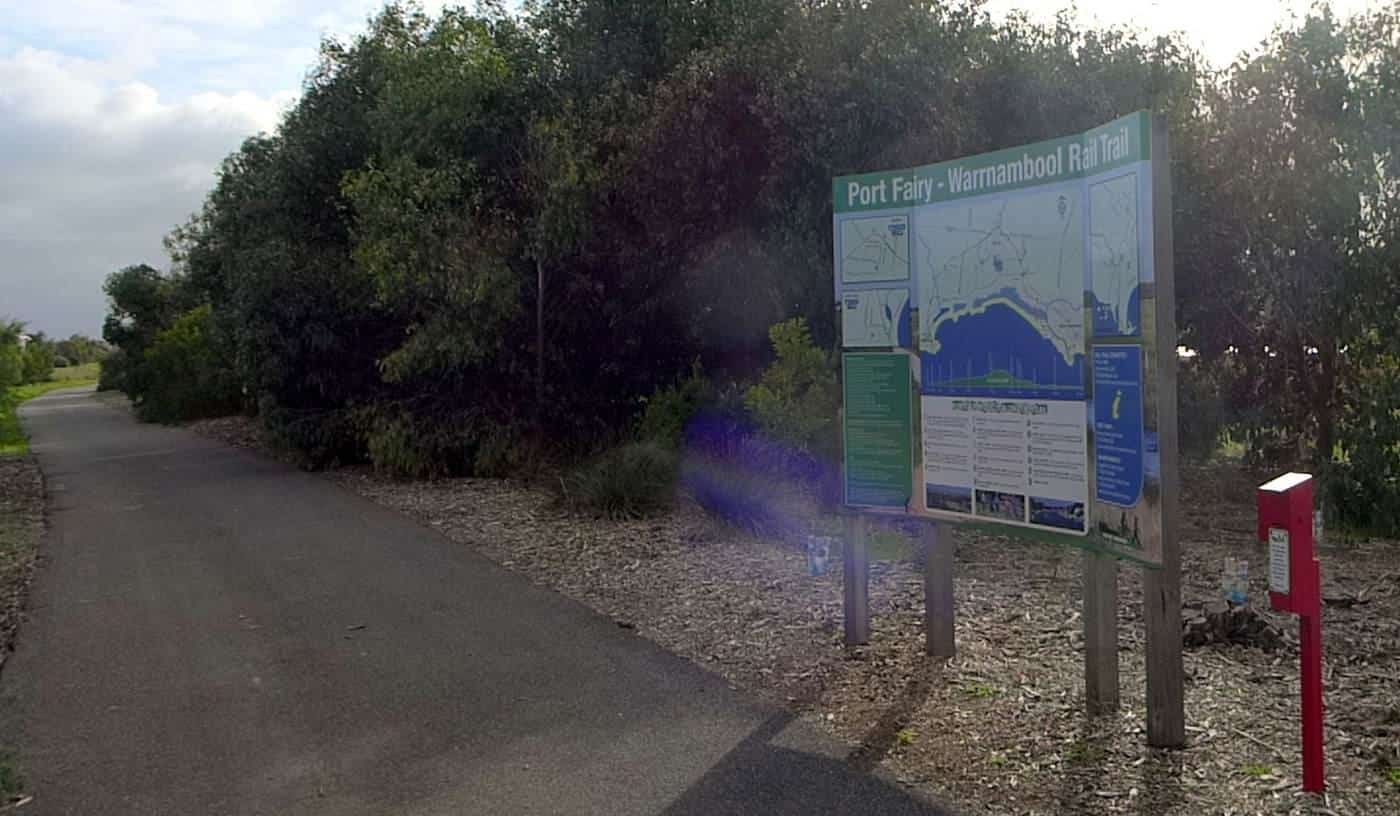
- Official maps or the manager’s files, downloaded. The Mawson’s nine map sections exist for a reason; Mapland and Bicycle SA are the printed outlets ORSR names. The Foundation publishes maps and an app for the Munda Biddi.
- A paper or offline copy. The Northern Rivers FAQ tells people not to rely on phone coverage.
- A power bank if your lights and phone share a charging habit.
- A personal locator beacon or satellite messenger on remote dirt. This is not theatre. ORSR asks you to let someone know the plan and notes limited coverage. The NT remote list is the same idea.
- ID, cards, and a written emergency contact that is not only inside a locked phone.
A bike computer is optional. A plan held by a person who is not on the trip is not optional once towns thin out.
First aid and the unglamorous extras
- a small first-aid kit you have opened once at home
- a compression bandage in snake country
- personal medication in the on-bike bag, not only in the van duffel
- sunscreen and lip balm
- a headlamp if you camp or use a fire-pit-free shelter
- cash or a card that works in a town that does not love your digital wallet
- a lock, especially on an e-bike
- for Munda shelters: a fuel stove, because the Foundation says there is no fire pit
- for any park overnight: the booking confirmation ORSR tells you to get in school holidays
We will not itemise a survivalist catalogue. If a thing has never been used on a weekend trip, ask why it is coming on a week.
What changes when someone else carries the bag
Luggage transfer — see self-guided versus guided — shrinks the on-bike list to a day kit: water, food for the day, layers, tools, lights, medication, charger if you are electric, and something you could survive an evening in if the duffel goes to the wrong town.
It does not shrink the legal kit. Helmet, bell, brakes and lights are not in the van.
It does not shrink water on a hot Brisbane Valley afternoon. The van is at the hotel.
Respect any size and weight limit the transfer person actually stated. We will not invent one. Overstuffed duffels are how transfers fail.
What not to pack
- a second pair of everything “just in case” a town can sell
- a road bike on a coarse-gravel listing
- a high-powered lookalike e-bike that is not a power-assisted cycle
- a campfire kit on a trail that forbids fires (Northern Rivers FAQ; Munda shelters)
- a speaker
- a highway shortcut in your head, which is not an object and still takes up space
- prices, ratings and operator claims — those do not belong in a bag or on this page
Checklists you can actually use
Use one. Do not merge them.
Rail-trail day or overnight with a bed
Rail-trail day kit
0 of 8 done
Ticks are saved in this browser only.
Remote dirt section
Remote dirt kit
0 of 8 done
Ticks are saved in this browser only.
A packing method
- Cite the surface and the longest gap. If you cannot, stop.
- Put the legal kit on the bike first. Helmet, brakes, bell, lights.
- Put water in before clothes. Clothes compress. Water does not.
- Add the repair kit you have used.
- Add clothes for the BOM forecast, not for a second climate.
- Add remote extras only if the route is remote.
- Ride a loaded hour. Remove one thing.
Then go and ride. If the bag is still heavy, the plan is still pretending to be three tours at once.
Related reading
Gear hub for the bike-to-surface argument. Road rules for why some of this kit is law. Seasons for heat, frost and fire. Gravel touring and road touring for the surfaces. Munda Biddi and Mawson before you pack as if they were a rail trail.
Frequently asked questions
What do you actually need for an Australian bike tour?
A bike that matches the official surface, an approved helmet, working brakes, a bell or horn where the state requires one, lights if you might use a tunnel or dusk, water for the longest gap, a puncture kit you have used, and clothes for the BOM forecast. Panniers or frame bags beat a heavy backpack.
What bike should I pack a tour around?
Sealed Murray to Mountains (Rail Trails Australia: asphalt, 137 km listing) suits road, hybrid, touring or a legal e-bike. Mixed gravel such as the Brisbane Valley needs wider tyres. ORSR says the Mawson needs an off-road bicycle. The Munda Biddi Foundation recommends mountain-bike or gravel experience.
What is legally required on the bike?
State pages differ in the fine print. Common requirements include an approved helmet, a working brake, a bell or horn, and lights plus reflectors at night. The Northern Territory and Western Australia spell this out in useful lists. Confirm the state you will ride.
Should I use panniers or bikepacking bags?
Panniers suit racks on sealed and firmer gravel trails. Frame, seat and handlebar bags keep weight in the triangle on rougher dirt. A heavy backpack is the option both styles are trying to avoid. We do not rank brands or invent prices.
What changes if I am on an e-bike?
Add the charger and the cable, a lock, and a range test you did at home with the same load. The Northern Rivers FAQ allows e-bicycles up to 250 W on that trail. The bike still needs to be a legal power-assisted cycle in that state.
Do I need camping gear on a rail trail?
Only if you intend to camp where camping is actually allowed. The Northern Rivers FAQ says you cannot camp on that trail. Many rail-trail towns have beds. Remote Munda Biddi shelters are a different kit — the Foundation describes bunks, tanks and no fire pit.
Sources and further reading
Facts on this page were checked against these primary and official sources. Conditions change — confirm before you travel or buy.
- Bicycle riders — Government of Western Australia
- Bicycle safety — Northern Territory Government
- Helmet use — Austroads
- About the trail — Munda Biddi Trail Foundation
- Mawson Trail — Office for Recreation, Sport and Racing (SA)
- Northern Rivers Rail Trail FAQ — Northern Rivers Rail Trail
- Murray to Mountains Rail Trail — Rail Trails Australia
- Brisbane Valley Rail Trail — Rail Trails Australia
- Climate data — Bureau of Meteorology