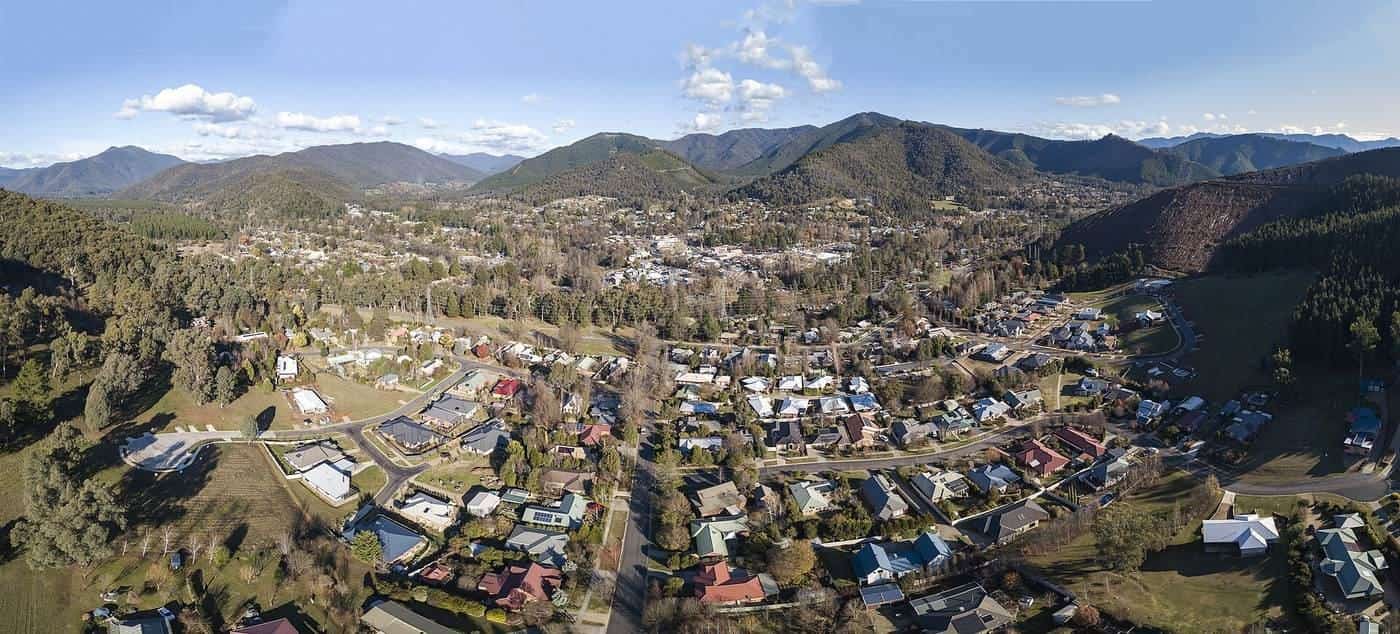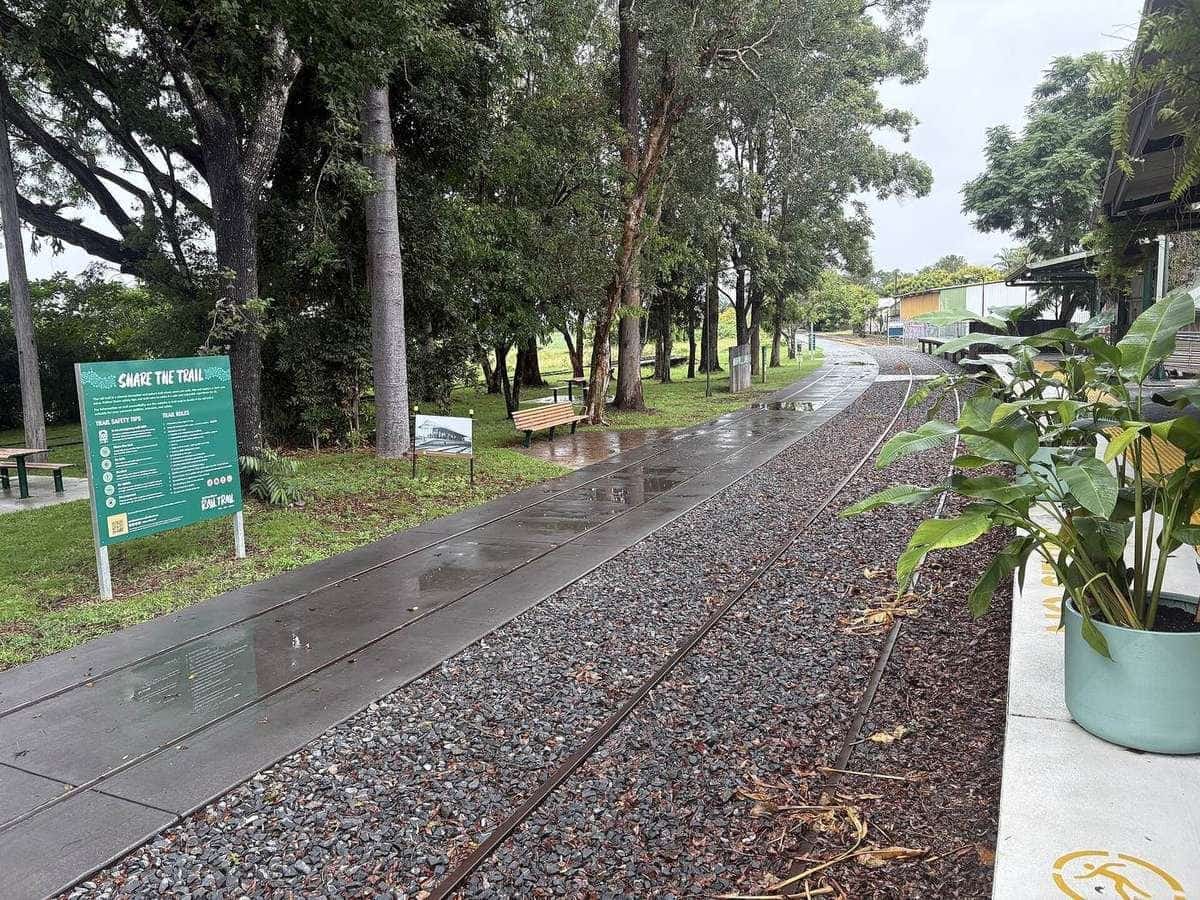
An e-bike is a touring bicycle with a motor that is allowed to help, not a scooter you take on holiday. The landscape does not change. The group’s speed spread changes. The packing list gains a charger and loses some of the arguments about the next hill.
This guide covers legal e-bike touring on the kinds of routes this site already writes about: sealed paths, unsealed rail trails, and the quieter roads that connect them. It does not invent hire-fleet prices, battery-range promises, or a statute number for every state. When a fact is state-specific, we name the page. When a fact is only a common pattern, we say confirm the state page.
The plain-English definition
Across Australia, a road-legal touring e-bike is generally a power-assisted cycle: a bike built to be moved by human pedalling, with a motor that assists, a continuous power rating commonly around 250 W, and assistance that fades once you are near 25 km/h. That sentence is a field guide, not a barrister’s brief. Manufacturers, importers and state regulators argue about the edges — throttle-assist, pedalecs, older 200 W rules, stickers, and what “continuous” means. The only safe method is to read the transport or road-safety page for the state you will ride in the week you ride.
Western Australia publishes one of the clearer official versions, which is why this guide quotes it at length and still tells you not to export it blindly to Queensland. The Road Safety Commission says:
- riders must be 16 or older to use an e-bike
- the motor can have a maximum power output up to 250 watts
- the bike needs human power — it is not meant to be ridden on the motor alone
- bicycle road rules apply to legal e-bike riders
- a bike that meets European Standard EN 15194 (a Pedalec) may have an electric motor up to 250 W, and on Pedalecs the assistance cuts out at 25 km/h
- a non-Pedalec power-assisted pedal cycle is limited to 200 W (petrol or electric)
- if there is more than one motor, the limit is the combined output
- bikes designed to be driven by the motor, bikes without functioning pedals, or motors above 250 W are not allowed on WA roads or paths and are treated as unlicensed motor vehicles
That is a Western Australian page. Other states publish their own definitions. Confirm the state page rather than memorising a regulation number from a comment thread.
250 W
NRRT e-bicycles
Trail FAQ, Murwillumbah–Casino–Lismore
250 W / 25 km/h
Common legal pattern
Confirm the state page
16+
WA e-bike riders
Road Safety Commission
What a trail manager can add
Even a legal road e-bike can be unwelcome on a particular path. The trail manager’s FAQ is the second document, not the first.
The Northern Rivers Rail Trail FAQ is the cleanest published example on this site. Allowed: bicycles and e-bicycles up to 250 W, accessibility devices, wheelchairs and mobility scooters, push scooters and skateboards on sealed sections only, prams, dogs on short leads, and horses in designated areas only. Not allowed: e-scooters or petrol-powered bicycles, motorcycles, trailbikes, quadbikes, cars, and other motorised recreational vehicles. Helmets are required; the trail is treated as a road-related area. There is no posted trail speed limit, but you ride to conditions, keep left, and treat pedestrians as the people who were not sold a motor.
That 250 W figure is a trail rule, aligned with the common legal pattern, not a reason to assume every rail trail in Australia printed the same sentence. If a manager is silent, you still need the bike to be legal on the roads and road-related areas you use to reach the trailhead.
Rail Trails Australia’s Brisbane Valley listing notes that e-bike charging is available in most towns and with hospitality providers. That is a facility note, not a national charging network and not a price. The Murray to Mountains asphalt listing is the sealed surface where a legal e-bike feels most like an ordinary touring bike.
Helmets, lights and the rest of the bicycle rules
A legal e-bike is ridden as a bicycle unless the state says otherwise. That means helmets, lights, bells, and left-side road rules travel with you.
Austroads states that it is compulsory for bicyclists to wear helmets in Australia. The exemption table is short and specific: no bicycle-helmet exemptions in the ACT or New South Wales; a Northern Territory exception for people 17 and over on public places, footpaths, shared paths or cycle paths separated from the roadway, or in a minister-declared area; Queensland medical and religious-headdress exemptions; South Australia Sikh religion only; Tasmania medical grounds at the Transport Commission’s discretion; Victoria religious or medical grounds; Western Australia medical or religious grounds with a written exemption process. Applications, Austroads says, should be strongly discouraged. Wear the helmet.
Western Australia’s Road Safety Commission repeats the helmet duty for all bicycle riders unless an exemption has been granted, lists the helmet standards WA accepts, and applies bicycle rules to legal e-bikes, with the extra minimum age. The same page requires working brakes, an audible warning device, and lights at night — a flashing or steady white front light and red rear light, visible for at least 200 metres, plus reflectors. Those are bicycle standards. They do not become optional because a battery is on the frame.
Transport for NSW’s sharing-the-road page is written at drivers, but it is the page a touring e-bike still relies on in New South Wales: bicycle riders have the same rights and responsibilities as other vehicle users, and drivers must leave 1 m at 60 km/h or less and 1.5 m above that. A motor that helps you hold 22 km/h up a rail-trail grade does not change the passing rule. It may change how surprising you are to a driver who expected a slower bicycle. Ride a predictable line. Use the bell on paths. Do not treat assistance as a licence to pass walkers at road speed.
The full legal companion is road rules and safety.
What is not a touring e-bike
The machines that cause the arguments are usually not bicycles.
E-scooters are a different class. The Northern Rivers FAQ bans them on that trail. Western Australia sends you to a separate eRideables page rather than treating a scooter as a bike. Do not arrive at a rail trail with a standing scooter and a touring plan.
Petrol-powered bicycles are also on the Northern Rivers “not allowed” list. They fail the quiet shared-path test even before they fail a legal definition.
High-powered “e-motorcycles” with motors well above the power-assisted limit, or without working pedals, are vehicles. Western Australia says they may be seized and that a fine is published on that page for using a non-compliant machine. We will not turn that into a national tariff. We will say: if it looks like a motorbike, it does not belong on a shared rail trail.
Throttle-only riding is the behaviour that gets legal pedalecs into trouble even when the hardware is compliant. WA’s page says the bike needs human power and is not meant to be ridden using the motor alone. Other states phrase the same idea in their own words. Touring with the motor as a gear, not as a replacement for pedalling, is how you stay inside the definition you claimed at the trailhead.
Why people tour on e-bikes
The honest reasons are not marketing adjectives.
Mixed groups. A sealed rail trail lets a stronger rider and a recovering knee share a day. Assistance compresses the speed gap without inventing a new route. The Murray to Mountains asphalt listing is the usual first example; the Northern Rivers Tweed section at 24 km is a day that becomes possible for more of the family.
Wind and load. A touring bike with bags on an inland afternoon is a different vehicle from the same bike empty. Assistance is a way to keep the day inside the hours you actually like to ride. It is not a way to add forty unplanned kilometres because the battery icon is still green.
Hills that are still railway hills. Rail trails are not flat. The Everton–Beechworth climb on the Murray to Mountains, and the Blackbutt Range end of the Brisbane Valley, are the usual exhibits. An e-bike does not remove the climb. It changes whether the climb ends the day.
Disability and stamina. A legal e-bike, and the mobility devices trail FAQs already allow, are how some people use a public path at all. That is a better use of the motor than a personal record.
None of those reasons require a price, a brand, or a “best e-bike of 2026”. Measure the bike you will actually ride.
Range is a local measurement
We will not publish a range claim. Assist level, cargo, tyre pressure, headwind, temperature, and the age of the pack change the number. A conservative touring method is:
- Ride a loaded local loop at the assist level you will actually use.
- Note how much battery that loop consumed, not how much the display promised at the shop.
- Compare that to the official daily distance you are considering — 24 km on the Tweed section, 25 km on the Riesling Auburn–Clare piece, a third of the Great Victorian, a section of the Brisbane Valley — and leave a margin for wind.
- Plan to charge overnight in a town the trail already names. Do not plan to charge at a random café unless you have asked that café.
- Carry the charger and the cable. The Northern Rivers world includes a complimentary charger note at Murwillumbah Railway Station if you bring your own cord — a local fact, not a national grid.
Two batteries are a weight decision, not a moral one. A single battery and shorter days is the other honest decision. Running the pack flat twenty kilometres from a socket is how e-bike touring becomes ordinary touring with a heavier bike.
Cold mornings and very hot afternoons both treat lithium poorly. That is a reason to keep the pack in the room overnight in a frosty Victorian town, and out of a parked car in inland South Australia, not a reason to invent a temperature chart.
Surfaces and the motor
Assistance does not change the tyre problem.
On asphalt (Murray to Mountains, 137 km sealed listing) a legal e-bike is a road-touring bike with a battery. See road touring.
On fine gravel (Riesling and Rattler, 53 km) the motor makes the grade easier and the corrugations exactly as annoying. Wider tyres still matter.
On coarse gravel and earth (Brisbane Valley mixed surface) the motor can tempt you to carry more speed into loose corners than the tyre can use. Ride the surface, not the wattage.
On remote dirt (Mawson, Munda Biddi) an e-bike is only a touring tool if you can charge it, carry it when the motor is dead, and stay on a bike that ORSR or the Foundation would still call appropriate. ORSR says you need an off-road bicycle on the Mawson. The Foundation recommends mountain-bike or gravel experience on the Munda Biddi. A heavy city e-bike with skinny tyres is the wrong answer to both sentences. See gravel touring.
Shared-path manners do not relax because you can accelerate. Bell. Slow to a walk near horses. Give way where the manager says pedestrians have priority — the Northern Rivers FAQ is explicit. Keep left. The motor makes a quiet approach even quieter; that is a reason to use the bell earlier, not later.
Charging, security and the touring day
Charge in the room you are sleeping in, with permission, using your own charger. Public sockets on a trailhead are a bonus when a manager or visitor centre publishes them, not a plan. Do not unplug someone else’s fridge in a caravan park to save a morning.
Carry a lock that actually holds the bike you would be sad to lose. E-bikes are heavier to walk to a bedroom and more attractive to steal. We will not recommend a brand.
Weight changes handling. Practise with the loaded bike, including the battery position you will use, before the first multi-day. A steep rail-trail cutting is a poor place to discover that the steering is now lively.
If the motor fails, you still need brakes, gears you can turn, and a route that does not assume assistance. That is why a highway connector is a bad idea on an e-bike for the same reasons it is a bad idea on a quiet bike.
Groups, hire and the things we will not say
Hire exists in many trail towns. We will not quote a daily rate, name a fleet, or promise that a hire bike will be fitted to you. Ask the shop about tyre width, battery age, spare chargers, and what happens if the motor fails ten kilometres out. Read self-guided versus guided if the question is really about a van, not about a motor.
Guided and self-guided products sometimes include e-bikes. That is a trade-off about support, not a legal shortcut. The bike still has to be legal. The helmet still has to be worn. The trail FAQ still applies.
Families should check minimum ages. Western Australia’s 16-year minimum for e-bikes is a published example of a rule that does not exist in every conversation about “the kids on e-bikes”. Confirm the state. Children’s helmets still need to fit. See Austroads and the state page.
A method for an e-bike tour
- Confirm the bike is a power-assisted cycle in that state, not a scooter and not a high-powered lookalike.
- Confirm the trail manager allows it. Northern Rivers: e-bicycles up to 250 W.
- Wear an approved helmet unless you hold an exemption that actually applies.
- Measure range at home with the load you will carry.
- Sleep in towns with a socket, on official section lengths you can cite.
- Ride the path rules — left side, bell, pedestrians, horses — as if you had no motor.
- Pack a non-electric exit: lights, puncture kit, a day that still works at bicycle speed.
E-bike touring checklist
0 of 7 done
Ticks are saved in this browser only.
Related reading
Northern Rivers Rail Trail for the 250 W FAQ in context. Road touring and gravel touring for the surfaces the motor does not change. Road rules for helmets and passing distances. What to pack for the charger, the lock and the rest of the bag.
Frequently asked questions
Can I ride an e-bike on Australian rail trails?
Often yes, if the bike is a legal power-assisted bicycle in that state and the trail manager allows it. The Northern Rivers Rail Trail FAQ allows e-bicycles up to 250 W and does not allow e-scooters or petrol-powered bicycles. Confirm each manager. We do not quote hire prices.
What is a legal e-bike in Australia?
In plain English, a bicycle designed to be pedalled, with a motor that assists rather than replaces riding, commonly limited around 250 W continuous power and assistance that drops away about 25 km/h. Definitions are state-based. Confirm the state transport page rather than a forum screenshot.
Do e-bike riders have to wear a helmet?
Treat a legal e-bike as a bicycle unless the state page says otherwise. Austroads states bicycle helmets are compulsory in Australia, with limited exemptions. Western Australia’s Road Safety Commission says all bicycle riders must wear an approved helmet unless a written exemption has been granted, and that legal e-bike riders follow bicycle rules with a minimum age of 16.
What is not an e-bike for touring?
A throttle-only machine without working pedals, a motor above the state’s power-assisted limit, or an e-scooter. The Northern Rivers FAQ lists e-scooters and petrol-powered bicycles as not allowed. Western Australia treats non-compliant e-bikes as unlicensed motor vehicles.
How far will an e-bike go in a day?
Range depends on assist level, load, wind, hills and temperature. We will not invent a kilometre figure. Measure your own setup on a local day ride, then plan charging overnight in the towns the trail already names.
Do I need a licence for an e-bike?
A bike that meets the state’s power-assisted pedal-cycle definition is generally ridden as a bicycle. A faster or more powerful machine is a different vehicle. Confirm the state page. This guide is not legal advice.
Sources and further reading
Facts on this page were checked against these primary and official sources. Conditions change — confirm before you travel or buy.
- Northern Rivers Rail Trail FAQ — Northern Rivers Rail Trail
- Bicycle riders — Government of Western Australia
- Helmet use — Austroads
- Sharing the road — Transport for NSW
- Murray to Mountains Rail Trail — Rail Trails Australia
- Brisbane Valley Rail Trail — Rail Trails Australia