Road touring in Australia is sealed-path and quiet-road touring. The useful ride is a former railway with asphalt on it, or a farm road that already behaves like a lane for bicycles. The unhelpful ride is a coastal highway that looks famous on a postcard and has nowhere for a loaded bike to live.
This guide is about that distinction. It is not a ranking of operators and it does not invent daily itineraries for hire. Surfaces and rules come from trail inventories and state transport pages. If a shoulder disappears, believe the shoulder.
What “road touring” means here
In Europe the phrase often means a signed long-distance cycle route on mixed minor roads. In Australia the nearest everyday equivalent is a sealed rail trail plus the short connectors that get you into town. Rail Trails Australia lists the Murray to Mountains as 137 km of asphalt, linking Wangaratta, Myrtleford, Bright, Beechworth and Yackandandah, with extra sealed pieces toward Oxley and between Rutherglen and Wahgunyah. That is the sealed touring product this country actually has.
Off the rail trail, road touring is still possible. It just inherits everything a motor vehicle inherits: speed limits, give-way rules, left-side riding, and the fact that many regional roads were sized for a ute and a truck, not for a touring pair riding two abreast. The road rules and safety guide is the legal companion. This page is the route-choice companion.
Road touring is not:
- a mountain-bike park, a jump line, or a downhill shuttle
- a gravel expedition on the Mawson Trail or the Munda Biddi
- a highway “challenge” you invented because the map was a straight blue line
If the group already owns road bikes and wants a first multi-day ride, start with a sealed path. If the group wants dirt, open gravel touring instead of forcing 28 mm tyres onto coarse gravel.
137 km
Murray to Mountains
Rail Trails Australia, asphalt listing
Left
Ride side
Australia rides on the left
1 m / 1.5 m
Passing (where published)
TfNSW and SA cycling laws
Why sealed paths beat sealed highways
A railway needed a grade a steam locomotive could climb. That is why a sealed rail trail feels like touring even when the hills are real. Climbs are long rather than vicious. Towns sit where stations sat. You can stop without becoming a traffic incident.
A highway is the opposite engineering problem. It exists to move cars and freight quickly between regions. Shoulders come and go. Sight lines are built for vehicles travelling much faster than you. Tourist routes add the extra problem of distracted drivers looking at the view you came to ride through.
Treat these as warning signs that a sealed road is a bad touring choice:
- The posted limit is high and there is no usable sealed shoulder.
- The road is a through-route for trucks or road trains.
- Weekend tourist traffic is the point of the road (coastal lookouts, alpine approaches, ferry queues).
- You would not walk it. If you would not walk it, do not tour it with luggage.
Treat these as signs a sealed road might be a good touring choice:
- Local traffic only, or a signed bicycle route.
- A wide sealed shoulder you have seen, not one you assumed from satellite view.
- Frequent towns, so a puncture is an inconvenience rather than an extraction.
- An official path running beside the road for the ugly bits.
We do not publish live traffic counts. Check the road the week you ride. A quiet Tuesday farm road can be a Friday event corridor.
Left-side riding is not a slogan
Australia drives and rides on the left. That sounds obvious until a visiting rider from a right-side country rolls out of a bakery and looks the wrong way at a crossing. Build the habit before the first town crossing:
- Approach every intersection expecting vehicles from the right on the nearer lane.
- On a shared path, keep left unless you are passing, and pass with a bell and enough space.
- On the road, ride as close to the left as is practicable without riding in the door zone, the gravel strip, or the broken edge. “As far left as possible” is not the same as “in the rubbish”.
- When you turn, think left-side geometry. A hook turn is legal in some places; a casual right sweep across a lane is how people get collected.
The Northern Territory Government’s bicycle-safety page is blunt about the basics that apply on a road: ride on the left unless overtaking or giving way to pedestrians, obey signs and lights, keep at least one hand on the bars, and do not create a hazard by moving into a driver’s path. Western Australia’s Road Safety Commission says bicycle riders can ride on any road except where a “no bicycles” sign applies, on freeways, and in pedestrian malls unless signed otherwise. Those are the kinds of state-page details that change a day. Confirm them.
Sharing with traffic
A bicycle on an Australian road is a vehicle. Drivers must treat you as one. You must behave like one.
Minimum passing distance, where the rule is published, is the number that matters most to a loaded tourer. Transport for NSW states that drivers who pass a bicycle rider must allow at least 1 metre when the speed limit is 60 km/h or less and 1.5 metres when it is more than 60 km/h. South Australia’s cycling-laws page uses the same pair of figures and applies them to cars, motorbikes, trucks and buses. The Northern Territory’s bicycle-safety page uses the same 1 m / 1.5 m split for drivers overtaking cyclists. If you cannot be given that space, a patient driver waits. If a driver cannot wait, you should not be on that road with panniers.
Those pages also describe exemptions that let a driver cross a centre line or straddle a lane if it is safe and they have a clear view. Do not take that as a promise that every driver will use the exemption well. Ride a predictable line. Hold it. Do not swerve into the space a driver just committed to.
Two abreast is legal in jurisdictions that say so — the Northern Territory says you must not ride more than two abreast on a road; Western Australia allows two abreast on roads with up to 1.5 m between riders, and single file on paths. Courtesy still exists. On a narrow farm road, single file when a vehicle is actually approaching is how you keep the social licence that lets touring continue.
Bike lanes, where they exist, are often compulsory to use if they are practical. Western Australia says if a marked bicycle lane is present you must ride in it. That is useful in a city and sometimes useless on a tour, because the “lane” ends at the town boundary and the highway begins. Plan the exit.
Footpaths and shared paths are a state question, not a national slogan. South Australia allows cyclists of all ages on footpaths unless a sign prohibits it, and requires riders to keep left, give way to pedestrians, and warn when needed. Western Australia allows path riding unless signed otherwise, single file on paths, and a 10 km/h cap when riding across a pedestrian crossing from the connected path. Do not assume the Adelaide rule applies in Sydney. Open the state page.
When a highway is a bad idea
The map will offer you highways. Resist most of them.
A highway is a bad touring idea when speed and volume are the design, not access. The Pacific Highway, the Hume, alpine tourist roads on a Saturday, and any road that regularly carries road trains are in that category unless a separated path already exists beside them. You cannot “take the lane” in a way that makes a 110 km/h overtaking decision safe for a driver who did not expect you.
A highway can be a short connector when there is no other way between a trailhead and a bed, and only if you have looked at the shoulder, the time of day, and an exit. Ride it early. Wear colour. Use lights even in daylight if the cuttings are dark. Get off it at the first signed path.
Never invent a shortcut onto a highway because a gravel section is wet. The planning method is to shorten the day or wait, not to improvise a high-speed alternative you have not checked.
Sealed rail trails as the Australian road tour
If you want the touring rhythm without the spray from a cattle truck, ride a sealed or mostly sealed rail trail and treat on-road bits as the exception.
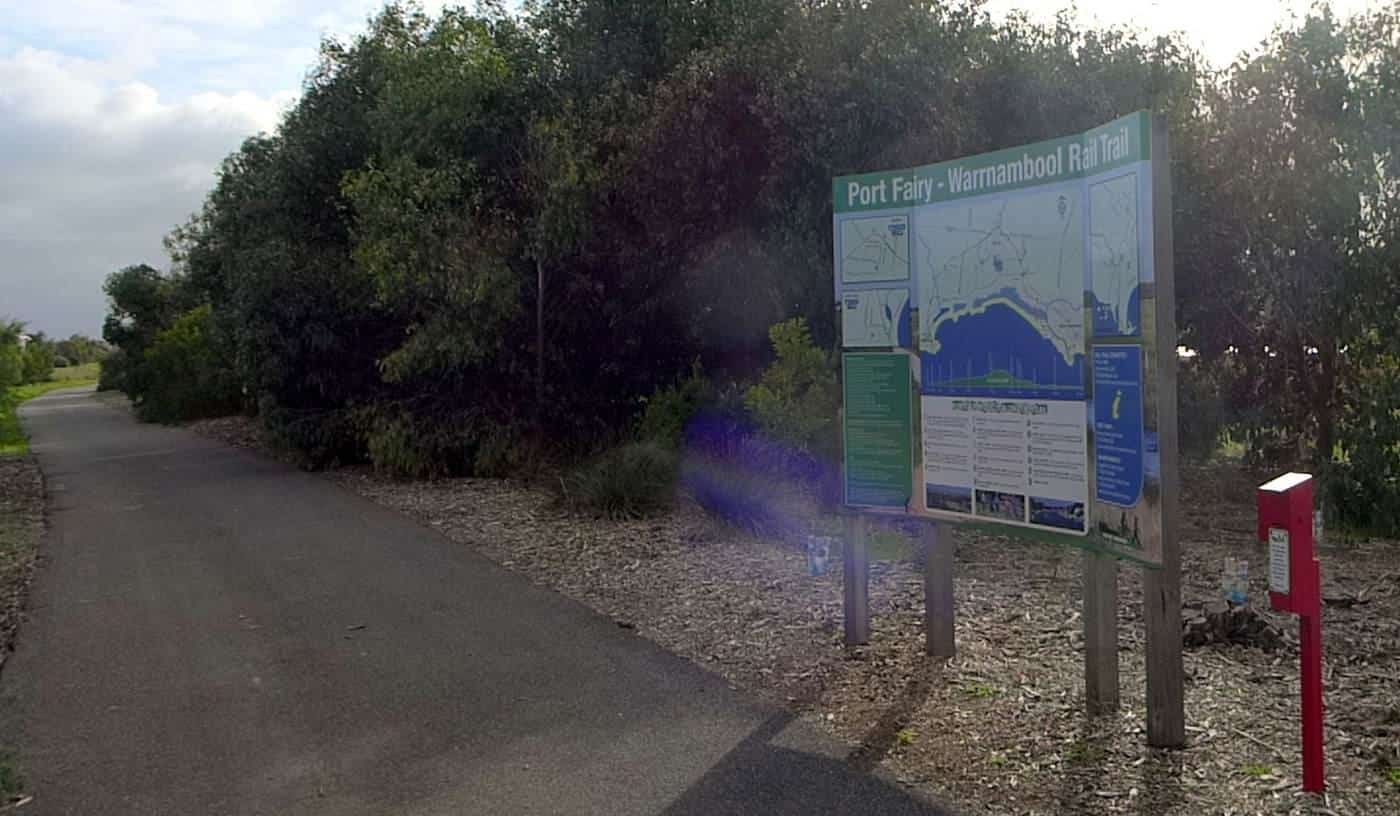
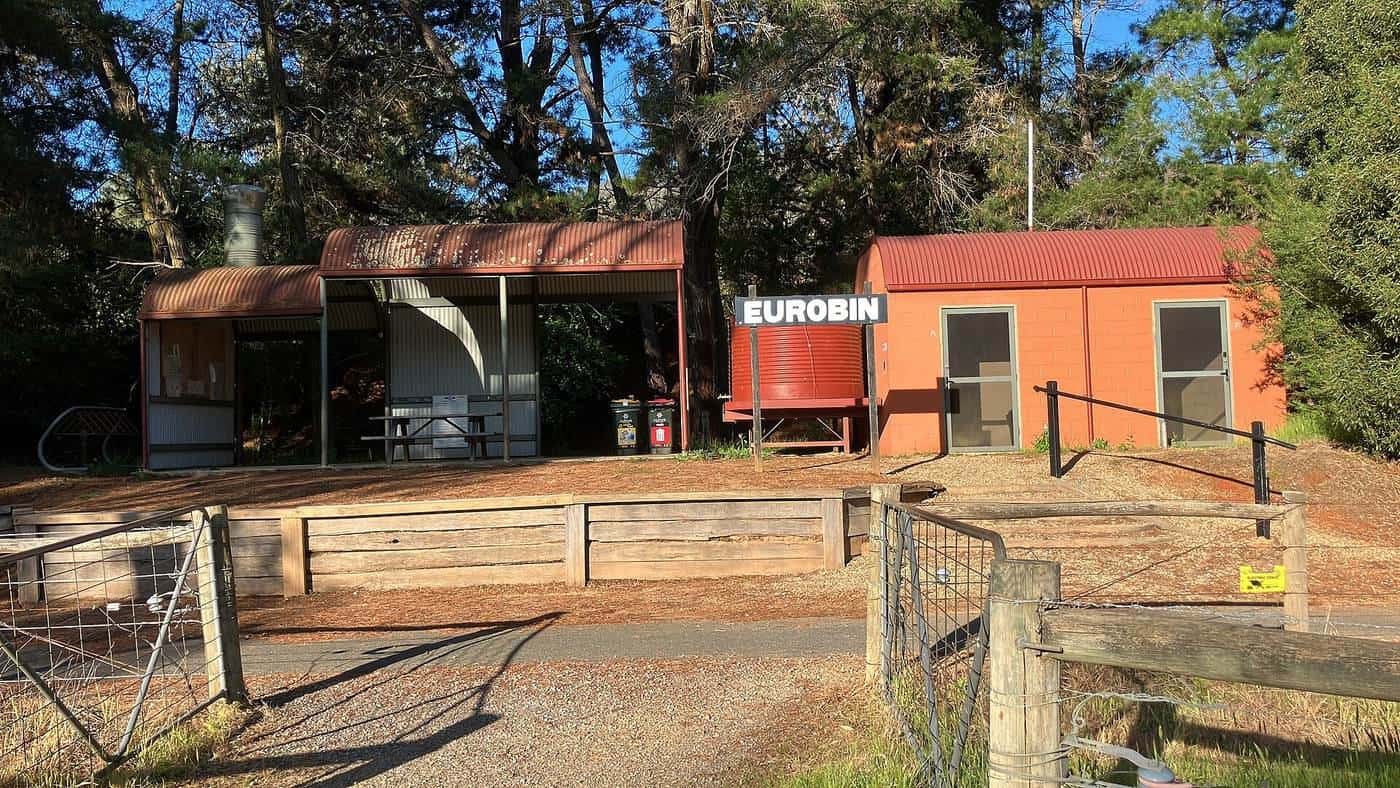
Rail Trails Australia’s Murray to Mountains listing is the reference sealed ride: the whole 137 km is described as sealed, on gentle grades except for the climb from Everton toward Beechworth and down to Yackandandah. The four pieces it names — Wangaratta to Bright, Everton to Yackandandah, Wangaratta to Oxley, and Rutherglen to Wahgunyah — are how you split a long weekend without turning it into a highway narrative. Read the Murray to Mountains guide.
Other trails in this site’s set are not road-bike advertisements. The Great Victorian is listed by Rail Trails Australia with compacted earth and fine gravel. The Brisbane Valley is mixed coarse gravel, earth, fine gravel and sealed town sections. The Riesling and Rattler listing is fine gravel. Use those on gravel touring days, or bring wider tyres and stop calling the trip a road tour.
On any rail trail you still meet roads. Crossings are where sealed-path touring becomes ordinary road touring for thirty seconds. Stop, look the Australian way, and assume a driver is exiting a driveway. South Australia’s cycling-laws page reminds drivers that entering a road from private land means giving way to anyone on the footpath — pedestrians and cyclists. Do not rely on that knowledge being fresh in every driveway.
Bikes, luggage and pace
A road bike is appropriate on continuous asphalt if you are comfortable on it with bags. Many people are not, once a handlebar bag changes the steering. A touring, endurance or hybrid bike with modest tyres is the quieter choice for a first sealed tour. An e-bike that meets the legal power-assisted definition is a road-touring bike on a sealed path; it is not a reason to join a highway. See e-bike touring.
Carry luggage low. A backpack on a road bike in a crosswind is how people wander toward the centre line. Panniers or a rear bag keep the weight where the frame expects it.
Pace is not a race number. Four hours of riding plus a long lunch is a tour. Eight hours on a sealed path is how you arrive too tired to notice the driveway you should have treated as a junction. The planning hub is the arithmetic. This page is the warning not to spend those hours on the wrong class of road.
Group riding on sealed roads
Groups make road touring more visible and more annoying, depending on how they occupy the lane. Two abreast, where legal, is often safer than a long single-file string that a driver tries to overtake in pieces. More than two abreast is how you lose the argument with the next council.
Agree the formation before the first hill:
- Two up on quiet roads when the law allows it and the lane is wide enough for a patient pass.
- Single file when a vehicle is actually there, on crests, and through every town main street.
- A gap in the group so a driver can pass in two bites rather than gambling on the whole bunch.
- Hand signals that mean the same thing to everyone, including the visitor who still thinks left and right are decorations.
Western Australia’s page says riders must stay at least 2 metres behind a vehicle and must not pass on the left of a vehicle that is turning left. That is group-survival advice as much as law. Do not stack on a bumper at a roundabout.
Weather, light and the sealed-path illusion
Sealed surfaces dry faster than gravel, which tempts people into winter days they have not packed for. Victorian mornings can be frosty even when the afternoon is mild — treat that as a clothing problem, not a climate score, and check the Bureau of Meteorology town forecast rather than a caption. See seasons.
Lights belong on a road tour even if you swear you will finish at three. Tunnels, long cuttings, and a late bakery stop all turn a sealed path into a visibility problem. The Northern Territory lists a white front light and a red rear light for night riding, plus reflectors; Western Australia specifies lights visible for at least 200 metres and a set of reflectors. Pack them.
Heat on bitumen is a different problem from heat on dirt. The road radiates. There is less shade. Ride early in a south-east Queensland or inland summer and sit out the middle of the day. We will not invent a temperature threshold. BOM and your own judgement are the instruments.
What this guide will not do
We will not tell you that a particular highway “is fine if you go early”. We will not invent a traffic count. We will not recommend an operator, a supported road-tour product, or a price. If you want a van and a booked bed, read self-guided versus guided as a trade-off page, then buy the product from the person who actually runs it.
We will not pretend Australia has a dense signed road-touring network like a European valley system. It has excellent sealed rail trails in some regions, quiet farm roads in others, and a large number of roads that are simply the wrong tool.
A practical sealed-touring method
- Pick a sealed surface you can cite. Murray to Mountains asphalt, or a town-to-town shared path you have confirmed.
- Draw the on-road connectors in a different colour. Those are the only kilometres you treat as traffic.
- Reject any connector that is a highway without a shoulder you have seen. Find another bed, a train, or a shorter day.
- Read the state rules the week you leave. Helmet, lights, footpath, two abreast, passing distance.
- Ride on the left as if someone from the other hemisphere is in your group. Someone usually is.
- Re-check closures. Fire, flood and events move. Rail Trails Australia and the trail manager beat a screenshot from last spring.
Sealed touring checklist
0 of 7 done
Ticks are saved in this browser only.
Related reading
If the tyres need dirt, go to gravel touring. If the group is mixed and the hills are the argument, go to e-bike touring. If you still need the legal detail, stay with road rules and safety. Then pick a state on destinations and a trail on rail trails.
Frequently asked questions
What is road touring in Australia?
Riding a multi-day route on sealed paths and sealed roads — typically a sealed rail trail such as the Murray to Mountains, or a quiet regional road that already has a usable shoulder or very little traffic. It is not a highway tour and not a downhill-park ride.
Do I need a road bike?
Only if the surface is actually sealed. Rail Trails Australia lists the Murray to Mountains as asphalt for its 137 km listing. On mixed gravel trails a road tyre is the wrong opening move. A hybrid or endurance bike is often the more honest choice once luggage is on the bike.
Why are highways a bad idea for bike touring?
High-speed traffic, narrow or absent shoulders, B-doubles, and driver expectation that nobody is riding there. A tourist highway can look scenic on a map and still be a poor place for a loaded bicycle. Prefer a rail trail, a signed cycle route, or a low-volume farm road you have checked.
Which side of the road do cyclists ride on in Australia?
The left. Cyclists follow ordinary road rules on the road, including keeping left except when overtaking or avoiding a hazard. Confirm the state page for two-abreast, footpath and bike-lane detail.
What passing distance must drivers give cyclists?
Where the rule is published, drivers must leave at least 1 m when the speed limit is 60 km/h or less and 1.5 m above that. Transport for NSW and South Australia’s cycling-laws page both state those figures. Check the state you are in the week you ride.
Is a sealed rail trail the same as road touring?
It is the Australian version of a valley path. You still cross roads and sometimes use short on-road connectors. You do not spend the day in the same lane as a tourist coach. Start there if the group has road bikes.
Sources and further reading
Facts on this page were checked against these primary and official sources. Conditions change — confirm before you travel or buy.
- Murray to Mountains Rail Trail — Rail Trails Australia
- Sharing the road — Transport for NSW
- Cycling laws — Government of South Australia
- Bicycle riders — Government of Western Australia
- Bicycle safety — Northern Territory Government
- Helmet use — Austroads